International News
US oil companies aren’t going to rush back to Venezuela
Venezuela may have the largest proven reserves in the world, but Orinoco Belt crude is very low quality.

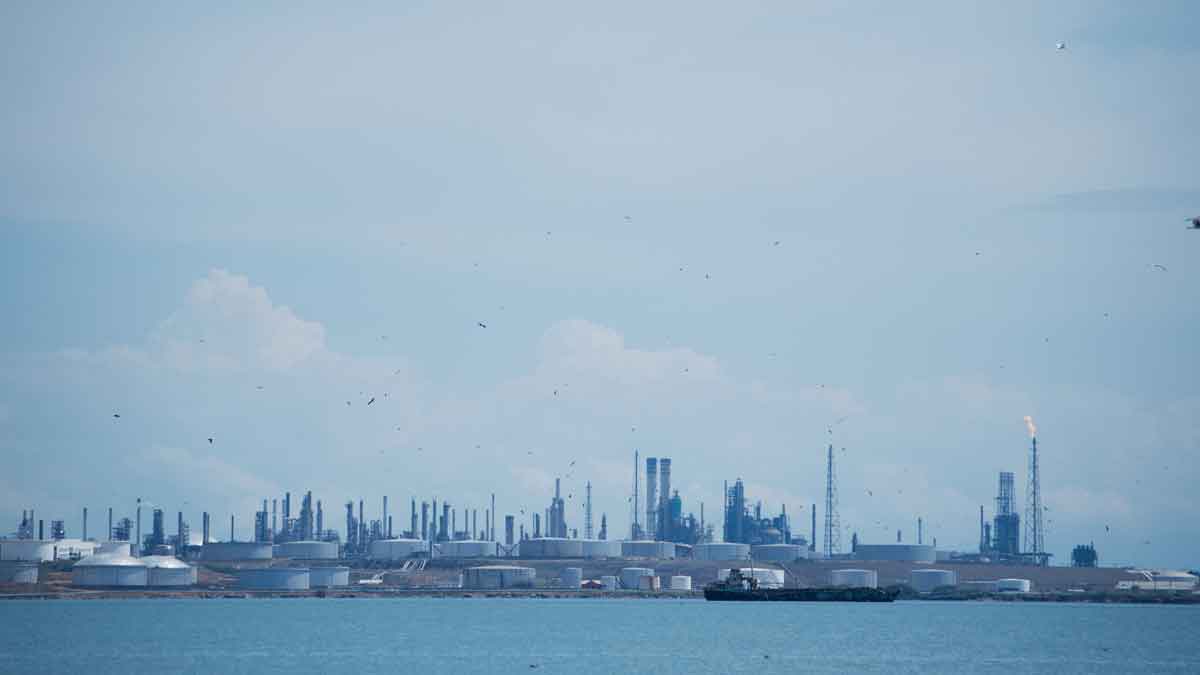
On Saturday, President Donald Trump said that U.S. oil companies were prepared to invest billions to tap into Venezuela’s proven oil reserves, after a special military operation exfiltrated dictator Nicolas Maduro and his wife Cilia Fores.
“We’re going to have our very large United States oil companies — the biggest anywhere in the world — go in, spend billions of dollars,” Trump said at his Mar-a-Lago retreat in Florida, “fix the badly broken infrastructure, the oil infrastructure.”
Multiple industry experts believe that’s very unlikely. Venezuela indeed has the largest proven oil reserves in the world, an estimated 303 billion barrels, accounting for 17% of the world’s proven supply. Corruption, neglect, and sanctions have hobbled production, but there is a much bigger problem. Venezuelan crude oil has very low quality, which limits demand.

Oil company executives were already signaling they are unconvinced that Maduro’s removal has reduced the risk of investing in Venezuela.
In a statement to NewsNation, ConocoPhillips said, “ConocoPhillips is monitoring developments in Venezuela and their potential implications for global energy supply and stability. It would be premature to speculate on any future business activities or investments.”
Chevron spokesperson Bill Turenne said the company “remains focused on the safety and well-being of our employees, as well as the integrity of our assets.”
Chevron is the only U.S.-based company with operations in Venezuela.
It’s all about the Benjamins
The EIA is forecasting a decline in U.S. oil production in 2026 due to a growing global oversupply, driven by a much warmer-than-expected winter in many regions and a slight slowdown in the worldwide economy. In an announcement on Sunday, OPEC+ provided the first indication that EIA projections will be accurate. Eight member nations are pausing previously planned oil output increases at least through March, citing low seasonal demand.
On Sunday night, energy markets were shrugging off the U.S. attack on Venezuela. After spiking briefly on Saturday, January contract FOB Cushing WTI Crude drifted downward, trading at $57.29 a barrel, and Brent was flat at $60.77.
Since Trump took office a year ago, the oil industry has shed 30,000 American jobs, with some companies introducing hiring freezes. Most of the cuts were made at BP, ConocoPhillips, Chevron, ExxonMobil, and Imperial Oil. The reduction in force is mostly due to the 25% drop in crude oil prices since Trump’s inauguration. Over the last year, the U.S. drilling rig count dropped by 7.3% and the active well count by 14.5%.
Falling oil prices are good news for American consumers but terrible for exploration, production, and field services companies. Adjusting for inflation, a barrel of crude is approaching the same levels reached during the start of the 2015 market crash, which forced hundreds of companies into bankruptcy.
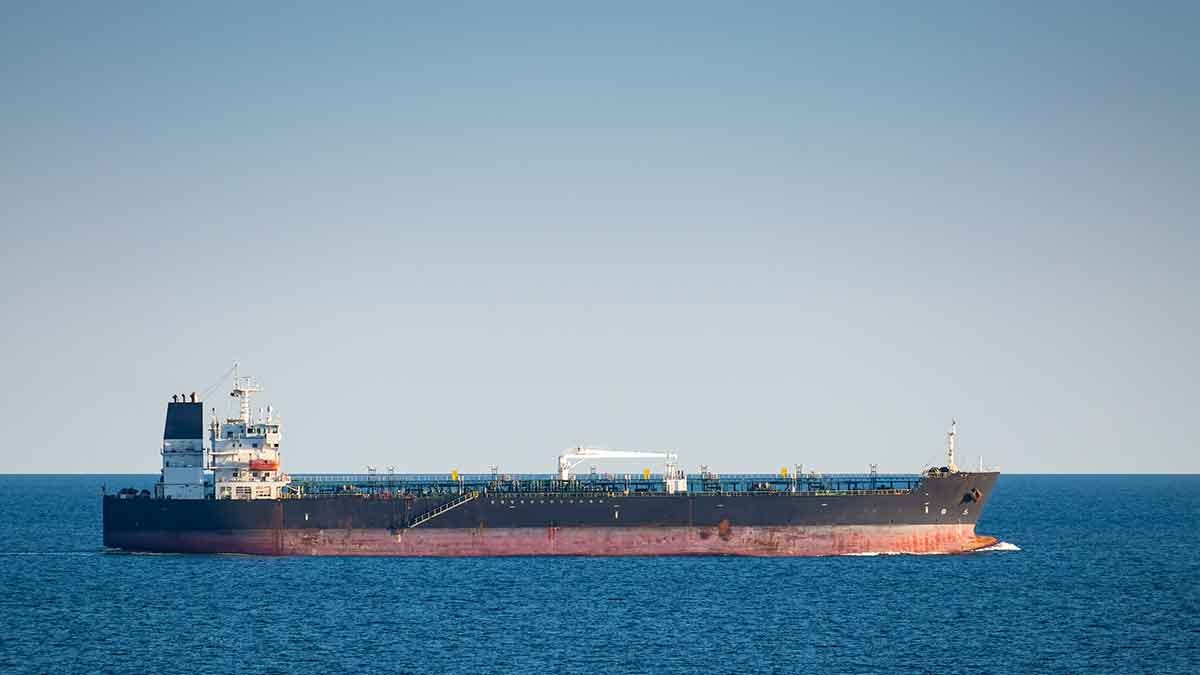
There isn’t a big market for Venezuela’s very heavy sour crude
In the oil industry, crude is classified as light or heavy and sweet or sour. These terms aren’t just oil-industry lingo. Refineries can’t use any oil. Each one is optimized for a specific type of crude.
Most of the oil reserves in the southern Caribbean Orinoco Belt are very heavy and sour by international standards. Very heavy means the crude is extremely viscous, sticky, and dense. Sour means it has a high concentration of hydrogen sulfide, which is corrosive and poisonous.
These factors, among others, affect the cost of extracting each barrel of oil out of the ground and the price buyers are willing to pay. If oil prices fall too low, it can cost more to suck crude out of the ground than what it can be sold for. The heavier and more sour the oil is, the higher the market price must be for extraction to be profitable.
Venezuela’s state-owned oil company PDVSA claims that its extraction cost is just $5 a barrel, one of the lowest rates in the world. But that figure does not include infrastructure costs, personnel, or the diluents required to lower the viscosity. Actual extraction costs are estimated at $30 to $40 per barrel, which still leaves out sharing profits among Venezuela, the U.S., and the producers, as proposed by the White House.
Heavy sour crude oil also costs more to refine, typically requiring a hydrocracker unit that costs at least $1.5 to $2 billion to build with an 18 to 24 month lead time. Additional processing is needed to extract higher-profit products such as diesel, aviation fuel, gasoline, naphtha, benzene, and other chemicals. Not only does it cost more to process Venezuelan crude, even with additional processing, the output of the most profitable products is also lower.
Then there is the issue of “sweetening” the oil by removing the hydrogen sulfide. The chemical smells like rotten eggs and is what gives natural gas its unique odor. If a small amount of the toxic gas remains after refining oil, it can be flared off. Larger amounts must be captured and converted into a usable product, such as pure sulfur or sulfuric acid. That requires building and operating a sulfur recovery unit.
Most U.S. refineries are designed to process heavy sour oil, but can’t use the very heavy crude from the Orinoco Belt. Refiners and vertically integrated oil companies (VIOCs) already shun Canada oil sands, which aren’t as heavy or sour as Venezuelan crude.
For the average American, increasing oil output in post-Maduro Venezuela won’t change the prices paid at the pump. For oil company executives and the shareholders they answer to, pouring billions of dollars into Venezuela to rebuild its infrastructure won’t turn a profit as long as crude oil is trading between $50 and $60 a barrel.
Why is Chevron in Venezuela if the oil quality and market conditions are so bad
Chevron has operated in Venezuela for over 100 years and currently partners with PDVSA. The company produces between 150,000 and 250,000 barrels of crude oil a day, approximately 20% of Venezuela’s daily production of 1.1 million barrels.
In 1976, Venezuela nationalized its oil industry, impacting 21 companies. Private corporations were forced to work with the state, with restrictions slowly tightening.
When Hugo Chávez became president of Venezuela in 1999, he immediately started tightening his control of PDVSA. From 2002 to 2003, he fired 18,000 employees, including top executives and industry experts, replacing them with people loyal to his administration.
Then, in 2007, Chávez ordered all existing oil projects to be converted into joint ventures with PDVSA, with Venezuela holding at least 60% of the assets. ExxonMobil and ConocoPhillips refused, and in response, had their assets seized, forcing both companies to withdraw. Chevron accepted the new terms and handed over control of its projects in May 2007.
ExxonMobil and ConocoPhillips took Venezuela to court to recover the money spent building their infrastructure. Despite winning their cases, neither company was paid. In contrast, Chevron stayed on, hoping to at least break even after almost a century of investment.
In 2017, the United States imposed financial sanctions on Venezuela, and in 2019, targeted PDVSA and its leadership with broader restrictions, blocking access to financial institutions and hobbling exports.
Chávez built populist support by telling Venezuelans that the West had been stealing the nation’s natural resources. The political purge at PDVSA and the flight of most oil producers in 2007 proved to be disastrous. The political loyalists installed to run PDVSA didn’t know how to run an oil company, but were experts at lining their pockets.
In 1999, Venezuela was producing 3.5 million barrels of oil a day, which was still less than half of Saudi Arabia’s output. Between neglect, corruption, the 2008 financial crisis, the 2015 oil crash, sanctions, and the COVID-19 pandemic, Venezuelan oil production has plunged 70%, and with it, so has the nation’s economy.
Despite the sanctions, Chevron has continued its operations in Venezuela due to a narrow license issued by the U.S. Office of Foreign Assets Control (OFAC). The company cannot start any new projects and can only cooperate with PDVSA using existing infrastructure. Additionally, profits are not allowed to benefit the Venezuelan government.
Due to Venezuela’s long-standing economic issues, Chevron hasn’t received any payments from PDVSA for years. Instead, the company is paid in crude oil. Because of this arrangement, the Venezuelan government doesn’t earn a single bolivar from Chevron’s operations.
Chevron has stayed in Venezuela and operates under an OFAC waiver for two reasons. First, if Chevron were forced to leave, all of the crude oil produced by PDVSA would become untraceable and sold to gray- and black-market buyers. Washington would rather know who is buying 20% of Venezuelan crude than being left in the dark. Additionally, Chevron is owed hundreds of millions of dollars due to non-payment. The only way the company can recovery any of its costs is through the extraction of crude oil from the Orinoco Belt.
What’s next
U.S. Secretary of State Marco Rubio clarified an early statement by Trump, saying that the U.S. would not be running Venezuela. Instead, Washington plans to enforce a blockade on black-market sales, with Asian nations accounting for the bulk of buyers. For now, the State Department sees Venezuela’s acting President, Vice President Delcy Rodriguez, as a reliable partner.
Trump told reporters that executives from U.S. oil companies would be traveling to Venezuela to explore new opportunities. Some experts believe that oil production can be increased to 1999 levels “relatively quickly,” while others say it will take years to fix Venezuela’s rotted infrastructure.
Because Venezuela is a member of OPEC, it’s unclear how much power Washington will have to force the cartel to open the faucets more. With today’s OPEC+ decision to pause previously planned production increases through the first quarter of 2026, it is unlikely member nations will be willing to give up market share at their own expense.
And if Washington wants to block all sales of Venezuelan oil to Chinese refiners, it’s unclear who the new buyers of the Orinoco Belt’s very heavy sour crude would be.
Journalism in the United States is under attack. Malcontent News is an independent news agency established in 2016 and a Google News affiliate. To remain independent, we rely on our subscribers to help us limit advertising. The easiest way to support our team is to subscribe to our Substack, Patreon, or Newsbreak.
Please Support Malcontent News
|
When you become a subscriber, you help us stay independent and paid advertiser free. A free press is a Constitutional right, but it doesn’t come free. Our core missions are showing you an unfiltered view of the before, during, and after, defend the First Amendment, and amplify BIPOC and LGBTQIA+ voices in an advertisement free experience. |
|
 |
For as little as $5 a month, you can support Malcontent News. Becoming a Patreon will help cover technology, data, bandwidth, and travel costs. Patreons get early access to content and a Discord server, virtual meetings with the staff, and private Zoom meetings. Subscribe NOW! |
 |
A one-time Venmo donation can help with safety gear, equipment, or a small thank you to show your appreciation for what Malcontent News provides. No amount is too small, even $5 goes a long way. Venmo NOW! |