International News
Navy intercepts boat loaded with cocaine near Venezuela
Over 675 kilograms of cocaine was found on the Barbados-flagged fishing boat.

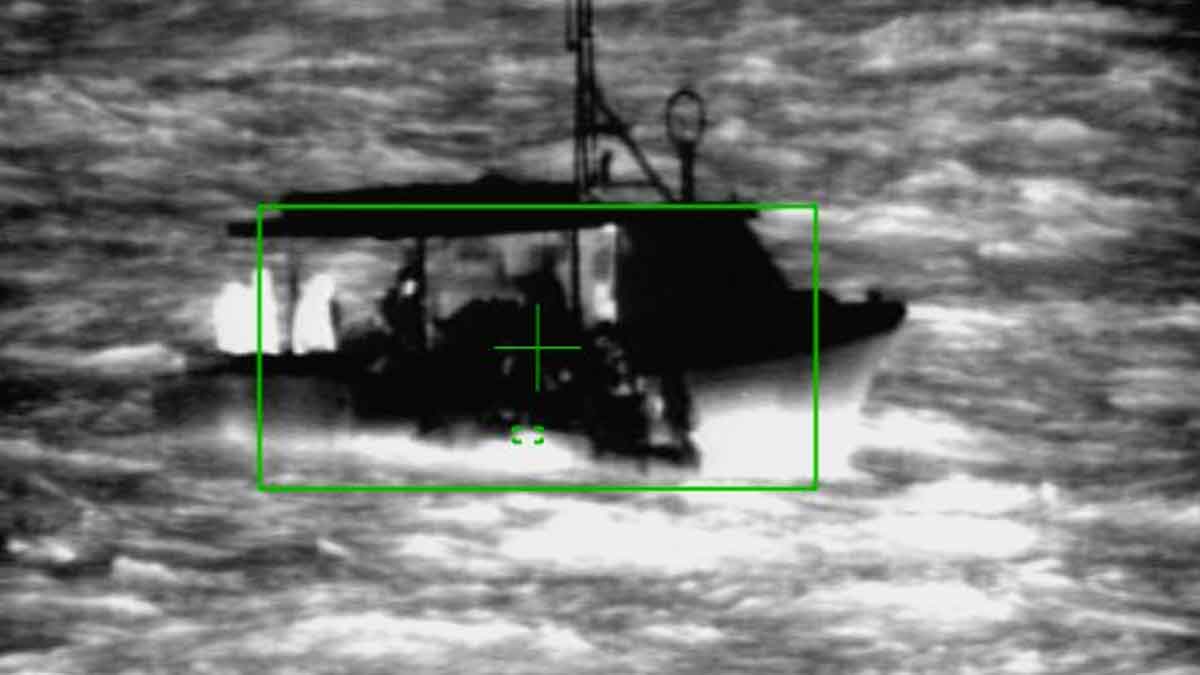
A boat smuggling cocaine was intercepted by the Navy between Venezuela and Barbados in the southern Caribbean, and the crew was taken into custody.
The French Navy boarded the Barbados-flagged fishing vessel in the Antilles Maritime Zone, northeast of Venezuela. The crew offered no resistance, and a search of the boat found 676.6 kilograms of cocaine in 28 compressed bricks.
The Joint Staff of French Military Operations posted on Twitter (X), “French Navy intercepted in international waters a fishing ship sailing under the flag of Barbados and discovered suspicious packages onboard.”

“Sustained effort of the French forces against illicit trafficking and for the respect of international law.”
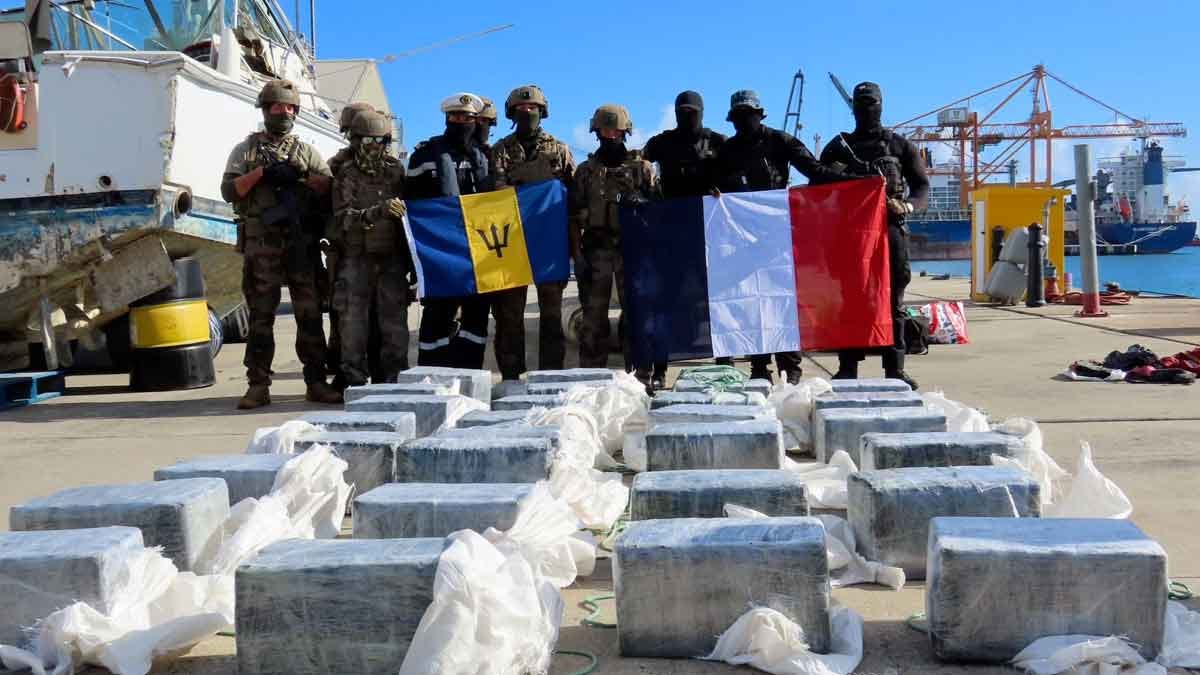
The crew was arrested, and the boat was brought to a port in Barbados, an island nation in the Lesser Antilles, 360 kilometers (225 miles) northeast of Venezuela.
The Minister of the Armed Forces and Veterans of France Catherine Vautrin said, “At the request of the Barbadian authorities, the vessel was handed over to them,” adding, “I salute the exemplary commitment of our sailors, alongside our partners.”
In August, the U.S. Department of Defense (DoD) deployed naval forces in the southern Caribbean, as part of Operation Southern Spear, to carry out military strikes on narco-terrorists transporting drugs to the United States in submarines and small boats.
The first military strike against a vessel was carried out on September 2. Through the rest of 2025, the Navy and Coast Guard conducted 36 attacks in the Southern Caribbean and the Eastern Pacific, killing at least 116. The last attacks near Venezuela were on December 30, in three separate strikes that the DoD claimed killed eight.
Speaking at the World Economic Forum in Davos last month, U.S. President Donald Trump declared that Operation Southern Spear was a complete success. “We’ve stopped — virtually stopped almost 100% of all drugs coming in by water.”
According to data published by U.S. Customs and Border Protection (CBP), 39,200 tons of drugs were seized at U.S. ports of entry in December 2025, a small year over year decline. However, the amount of cocaine, fentanyl, heroin, ketamine, marijuana, and methamphetamine seized in fiscal year 2026, which started in October, is on track to exceed the volume intercepted in 2025.
The DoD and DHS did not respond to multiple requests for comment about the interception of the drugs by the French Navy or the status of Operation Southern Spear.
After removing Venezuela’s dictator, oil became the new priority
On January 3, the U.S. carried out a special military operation to exfiltrate Venezuelan dictator Nicolás Maduro and his wife Cilia Flores to face conspiracy charges related to weapons and drug smuggling.
The White House now supports Venezuela’s Vice President, Delcy Rodriguez, who is aligned with Maduro’s United Socialist Party. Since Maduro’s removal, there have been no more interceptions of drug smuggling boats or submarines by the DoD or Department of Homeland Security (DHS) in the Southern Caribbean.
Over the last month, acting President Rodriguez has become increasingly uncooperative with Washington after the nation’s oil and gas revenues were seized by the U.S. In written notes prepared for the Senate Foreign Relations Committee, U.S. Secretary of State Marco Rubio warned, “Make no mistake, as the president [Trump] has stated, we are prepared to use force to ensure maximum cooperation if other methods fail.”
On Wednesday, government-sanctioned pro-Maduro demonstrations were held in Caracas. The protesters accused the U.S. of interfering with Venezuela’s sovereignty, escalating political tensions, and causing increasing uncertainty about the nation’s future.
After the January 3 military raid, Trump minimized the drug trafficking connections in Venezuela, instead promising to revitalize the country’s crumbling oil and gas industry. According to him, U.S. energy companies had already committed $100 billion in investments prior to Maduro’s removal.
However, during a televised White House summit with U.S. oil industry executives in early January, it was revealed that none of the companies had committed to make new investments in Venezuela’s oil and gas infrastructure.
Exxon CEO Darren Woods told Trump that the Venezuelan market is “uninvestable.”
When ConocoPhillips CEO Ryan Lance asked if the U.S. would assist in recovering the $12 billion in assets Venezuela seized in 2007, Trump said, “Well, it’s a good write off.”
In response, Lance said, “It’s already been written off.”
Currently, only Chevron operates in Venezuela under a special license from the State Department, which the Biden administration extended in 2024. When Hugo Chavez fully nationalized the oil industry as part of the 2007 Bolivarian Revolution, Chevron was the only producer to agree to the conditions set by Venezuela’s state-owned oil and gas company PDVSA.
Journalism in the United States is under attack. Malcontent News is an independent news agency established in 2016 and a Google News affiliate. To remain independent, we rely on our subscribers to help us limit advertising. The easiest way to support our team is to subscribe to our Substack, Patreon, or Newsbreak.
Please Support Malcontent News
|
When you become a subscriber, you help us stay independent and paid advertiser free. A free press is a Constitutional right, but it doesn’t come free. Our core missions are showing you an unfiltered view of the before, during, and after, defend the First Amendment, and amplify BIPOC and LGBTQIA+ voices in an advertisement free experience. |
|
 |
For as little as $5 a month, you can support Malcontent News. Becoming a Patreon will help cover technology, data, bandwidth, and travel costs. Patreons get early access to content and a Discord server, virtual meetings with the staff, and private Zoom meetings. Subscribe NOW! |
 |
A one-time Venmo donation can help with safety gear, equipment, or a small thank you to show your appreciation for what Malcontent News provides. No amount is too small, even $5 goes a long way. Venmo NOW! |